To maximize returns on a restaurant's tech stack, we should focus on automation, seamless integration, and user-friendly features. Streamlining tasks like invoice processing can reduce labor costs and improve accuracy. Effective data portability ensures seamless transitions, and customizable workflows enhance efficiency. Prioritizing scalable solutions enables growth and supports long-term success. Tracking KPIs, such as operational costs and order accuracy, measures performance. Exploring these elements reveals how the right software strategy boosts profitability and efficiency.
Key Takeaways
- Opt for software with seamless API integration to enhance data flow and minimize operational errors.
- Choose automation features that streamline tasks and reduce labor costs, boosting overall efficiency and profitability.
- Prioritize flexible software solutions that enable customizable workflows, adapting to unique operational needs and enhancing user adoption.
- Evaluate the intrinsic ROI potential by considering direct revenue boosts from features like online ordering systems.
- Ensure the software is scalable to support future growth and avoid costly disruptions during upgrades.
Evaluate Automation Opportunities
How can we maximize efficiency in our restaurant operations? By evaluating automation opportunities, we can streamline tasks and reduce manual errors.
Implementing restaurant software for automated workflows, such as invoice processing, enables our team to focus on more valuable activities, thereby boosting productivity. Automation enhances data accuracy and lowers labor costs by minimizing the potential for manual input errors.
Automating workflows boosts productivity, enhances data accuracy, and reduces labor costs by minimizing manual errors.
Automated inventory management systems can significantly reduce food waste, thereby improving the accuracy of our cost of goods sold (COGS) and positively impacting profit margins.
Additionally, adopting automated online ordering systems can increase average ticket sizes by 20-30%, driving revenue with minimal effort.
Assess Integration and Data Portability
When selecting restaurant software, evaluating integration and data portability is vital to confirm smooth operations. We must ensure that the software integrates seamlessly with our existing systems via APIs or formatted exports, such as CSV. This reduces operational friction and saves time. Effective integration minimizes manual entry errors, cutting labor costs and enhancing data accuracy.
Here are the Key Aspects, Their Benefit & Outcome:
- API Integration: Seamless data flow - Reduced operational friction
- Data Portability: Easy data migration - Efficient workflow
- Source Document: Enhanced verification - Improved data accuracy
- Real-Time Sharing: Informed decision-making - Optimized performance
A well-integrated tech stack enables real-time data sharing across platforms, which is essential for informed decision-making and operational efficiency. Let’s prioritize systems that support these features to optimize our restaurant's performance.
Prioritize User-Friendly Features
When we prioritize user-friendly features in restaurant software, we simplify workflow management, making it easier for our staff to engage with the system.
This not only optimizes task efficiency by reducing errors and cutting down on training time, but also enhances staff engagement as they spend less time on tedious manual inputs.
Simplify Workflow Management
As we focus on simplifying workflow management in restaurant operations, prioritizing user-friendly software features becomes essential. User-friendly software reduces manual touches in workflows, enhancing data accuracy and cutting labor costs by minimizing human error.
Automated workflows streamline operations by directly connecting with vendors and simplifying the process of invoice ingestion. This allows our staff to concentrate on high-priority tasks instead of tedious data entry.
The flexibility of software design supports unique workflows, enabling us to tailor processes that fit our operational needs without being confined to rigid structures. Research indicates that ease of use encourages staff adoption, leading to more efficient operations and increased productivity.
Customizable automated workflows not only simplify invoice processing but also enhance approval processes, boosting overall operational efficiency.
Enhance Staff Engagement
To truly enhance staff engagement, prioritizing user-friendly features in our restaurant software is essential. User-friendly software interfaces encourage adoption and ease of use, guaranteeing that our team navigates systems with confidence.
When software is intuitive, employees spend less time troubleshooting and can focus more on delivering exceptional customer service. Automated workflows play an important role in reducing manual input, which can often be frustrating and time-consuming.
By freeing our staff from repetitive tasks, they can engage in more meaningful activities that boost morale and productivity. Additionally, a streamlined tech stack supports operational efficiency through direct vendor connections and easy invoice ingestion.
Providing ongoing training and support ensures our team feels competent, which in turn boosts both job satisfaction and retention rates.
Optimize Task Efficiency
Optimizing task efficiency in our restaurant operations starts with prioritizing user-friendly software features. By choosing tech stacks with intuitive interfaces, we minimize the learning curve for our staff, allowing them to operate more efficiently and reducing training time.
Automating repetitive tasks with these user-friendly features can significantly reduce manual inputs, thereby enhancing data accuracy and overall operational efficiency. Systems that support direct vendor connections and easy invoice ingestion streamline our workflows, enabling quicker processing and approvals.
Moreover, a flexible software solution allows us to customize workflows to match our unique operational needs, thereby boosting staff adoption. Prioritizing such features not only enhances employee satisfaction and productivity but also improves the overall customer experience.
Ultimately, this approach contributes to higher revenue, thereby proving the value of the tech stack.
Analyze Flexibility for Custom Workflows
When we consider the flexibility of restaurant software, it's essential to focus on tailored process integration that meets our unique operational needs.
Customizable workflows offer significant benefits by allowing us to adapt software functionalities, such as direct vendor connections and streamlined invoice processes, to fit our specific requirements.
This adaptability not only enhances our efficiency but also guarantees we remain competitive in an ever-evolving industry landscape.
Tailored Process Integration
Although restaurants face various operational challenges, integrating tailored processes into their software can greatly improve workflow efficiency. A restaurant tech stack that integrates flexible solutions allows us to customize workflows that match our unique needs.
This customization enhances user adoption and streamlines operations by automating tasks such as invoice processing and approvals, thereby reducing manual inputs and minimizing errors.
With the ability to configure automated workflows, we can adapt swiftly to changing demands without being restricted by rigid software structures. User-friendly interfaces and adaptable features ensure that our staff can engage with the technology effectively, leading to improved performance and reduced training time.
Additionally, integration capabilities with existing systems facilitate seamless data transfers, maintaining overall operational efficiency while implementing these tailored workflows.
Workflow Customization Benefits
Having established the advantages of tailored process integration, let's explore how flexible software solutions benefit workflow customization.
These solutions allow us to tailor workflows to our unique operational needs, enhancing efficiency. By integrating vendor connections, they streamline invoice processing and approvals, minimizing manual touches and potential errors. This adaptability simplifies invoice ingestion and encourages staff adoption with user-friendly interfaces.
Customizable workflows support the automation of repetitive tasks, freeing up valuable staff time for strategic initiatives that drive revenue and enhance customer satisfaction.
Additionally, a well-customized tech stack enhances data portability and integration capabilities, ensuring that various software applications work harmoniously without disrupting existing workflows. This flexibility in design not only boosts operational efficiency but also reduces reliance on rigid processes that may hinder our performance.
Adapting to Unique Needs
To effectively adapt to our unique needs, flexible software solutions offer the customization necessary for creating workflows that cater specifically to our operational demands.
With customizable automated workflows, we can streamline tasks such as invoice processing and approvals, guaranteeing that our staff can manage daily operations with ease and efficiency. This adaptability reduces manual input, minimizing errors and boosting data accuracy.
Furthermore, systems with direct vendor connections and user-friendly interfaces enhance our service speed and customer satisfaction. Integrating source documents with data entries further enhances our verification processes.
Calculate Intrinsic ROI Potential
When calculating the intrinsic ROI potential of restaurant software, it's crucial to contemplate how these tools can directly boost revenue beyond mere efficiency gains.
Technology that enhances intrinsic ROI, such as automation systems, goes beyond simply streamlining processes. For instance, Ottimate's Bill Pay feature not only automates invoice processing but also provides cash back, adding to revenue.
Ottimate’s Bill Pay feature automates invoices and adds revenue through cashback.
Reducing manual touches with efficient software minimizes labor costs, thereby boosting profitability. Online ordering systems exemplify this by increasing customer spending by 20-30%, demonstrating the financial impact of technology.
Strategic investments in such technology can fast-track revenue growth. We must carefully assess how each software solution can contribute to our bottom line, ensuring it generates direct revenue and pays for itself.
Focus on Seamless System Integration
Why is seamless system integration so essential for our restaurant operations? It enables us to share data accurately and efficiently between applications, thereby enhancing our operational efficiency. By integrating our tech stack with existing solutions, we can minimize manual inputs, which reduces errors and eliminates extra verification processes. This approach helps us significantly reduce labor costs.
Moreover, effective data portability options, such as API connections or formatted data exports, ensure seamless transitions between systems without disrupting our workflows. Attaching source documents to data entries enhances verification and overall usability.
On the other hand, poor integration can create operational blind spots and result in mismatched data and duplicate entries, leading to increased costs and a negative impact on the guest experience. Therefore, seamless integration is key to our success.
Consider Long-Term Scalability
Although many restaurant owners focus on immediate operational needs, considering long-term scalability is equally essential for sustained success.
By choosing scalable technology, we ensure that our software can grow with us, accommodating increased transactions and new locations without requiring a complete overhaul. This approach minimizes costly disruptions and downtime, allowing our systems to adapt seamlessly to changing demands.
Selecting scalable technology ensures our software evolves with us, reducing disruptions and adapting effortlessly to new demands.
A scalable solution also makes it easy to add functionalities like online ordering or loyalty programs, boosting customer engagement and revenue.
Investing in long-term scalability helps us stay competitive as technology evolves, reducing the risk of obsolescence.
Ultimately, prioritizing scalable software solutions can lead to significant savings by minimizing the need for frequent replacements, thereby supporting profitability even in tight-margin environments.
Let's make strategic decisions for lasting growth.
Align With Business Objectives
To truly leverage technology for our restaurant's success, alignment with business objectives is essential. By ensuring our software choices align with our business goals, we can enhance operational efficiency and drive revenue growth.
Establishing clear growth targets for the next one to three years allows us to select technology that supports scalability and adapts to market changes. Incorporating features like online ordering and loyalty programs can boost ticket sizes by 20-30%, directly aligning with our goal to maximize sales.
Regularly reviewing operational efficiency metrics helps us determine whether our technology meets strategic objectives, enabling us to make timely adjustments. Engaging stakeholders in the decision-making process ensures that the technology aligns with team needs, fostering adoption and maximizing the benefits of our investments.
Measure Success Through Performance Metrics
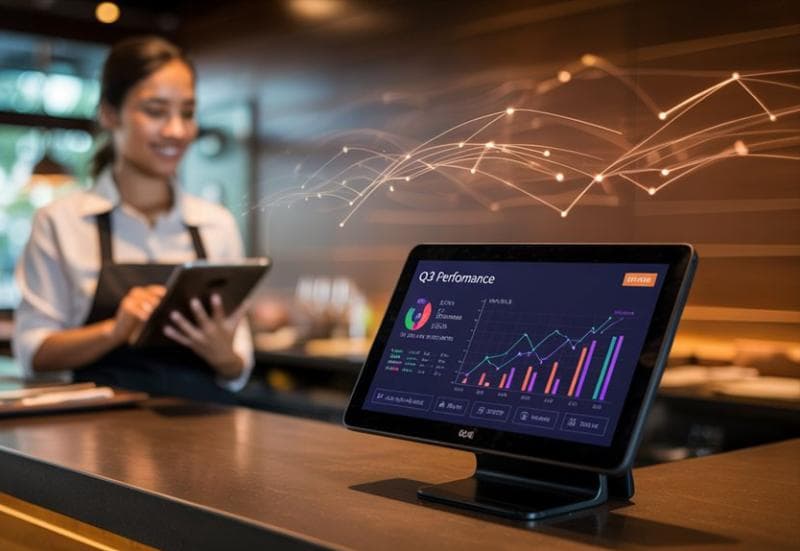
How can we ensure that our restaurant's technology investments yield the desired results? We start by establishing clear key performance indicators (KPIs) for our tech stack. These might include reducing operational costs, improving order accuracy, and boosting customer satisfaction scores.
Regular data analytics reviews enable us to monitor the performance of each tool, pinpointing which systems best align with our business objectives.
We compare our restaurant's financial performance before and after adopting new technology, evaluating ROI through revenue growth and cost savings.
Tracking engagement metrics, such as usage frequency and staff satisfaction, reveals how effectively new software solutions enhance workflow efficiency.
Benchmarking against industry standards enables us to assess the performance of our tech stack, ensuring it aligns with operational goals and identifies areas for needed improvements.
Conclusion
To sum up, selecting the right restaurant software involves evaluating automation opportunities, ensuring seamless integration, and prioritizing user-friendly features. We should analyze flexibility for custom workflows, calculate intrinsic ROI potential, and consider long-term scalability. It's crucial to align software choices with business objectives and measure success through performance metrics. By focusing on these key areas, we can choose a tech stack that not only pays for itself but also enhances operational efficiency and drives business growth.