By integrating effective inventory control, we can reduce waste and increase cash flow by aligning menu prices with actual ingredient costs. Using methods like FIFO and leveraging inventory management systems helps maintain fresh stock, minimizing spoilage and overordering. Real-time tracking and historical data analysis guarantee accurate stock levels and dynamic pricing. Setting par levels and conducting regular audits optimizes order decisions and financial management. You'll soon discover how these strategies enhance profitability further.
Key Takeaways
- Effective inventory management reduces food waste by aligning menu prices with costs, thereby enhancing profitability.
- The FIFO method ensures stock rotation, decreases waste, and enhances meal quality.
- Real-time inventory tracking optimizes purchasing, minimizing waste, and increasing cash flow.
- Accurate historical data analysis improves pricing decisions and portion control, reducing waste.
- Regular audits and staff training help prevent overordering and spoilage, thereby maintaining healthy profit margins.
Understanding the Impact of Inventory Control on Profits
When we examine the impact of inventory control on profits, it becomes clear that effective management is crucial to a restaurant's success.
By implementing strong inventory management practices, we can considerably reduce food waste and control food costs. Tracking inventory with accurate data allows us to align menu prices with actual expenses, ensuring profitability.
Cost control becomes more manageable when we minimize waste through effective inventory management, which helps us maintain our profit margins. Regular audits help us identify discrepancies and adjust strategies, preventing unnecessary capital from being tied up.
The Role of FIFO in Minimizing Waste
Embracing the FIFO (First In, First Out) method is essential for minimizing waste in our restaurant operations. By using older stock before newer items, we effectively manage inventory, reducing expired ingredients and improving our food cost percentage.
Incorporating FIFO into daily routines offers several benefits:
Inventory Control: Maintains ideal inventory levels, preventing shortages and overstock.
Waste Reduction: Decreases waste, saving money on discarded items.
Staff Training: Regular training promotes accountability and instills waste-reducing habits.
Quality Ingredients: Guarantees the freshest ingredients are used, enhancing meal quality.
Harnessing Inventory Management Systems for Efficiency
While effective inventory management is crucial for any restaurant aiming for efficiency, implementing a robust system can significantly transform how resources are managed.
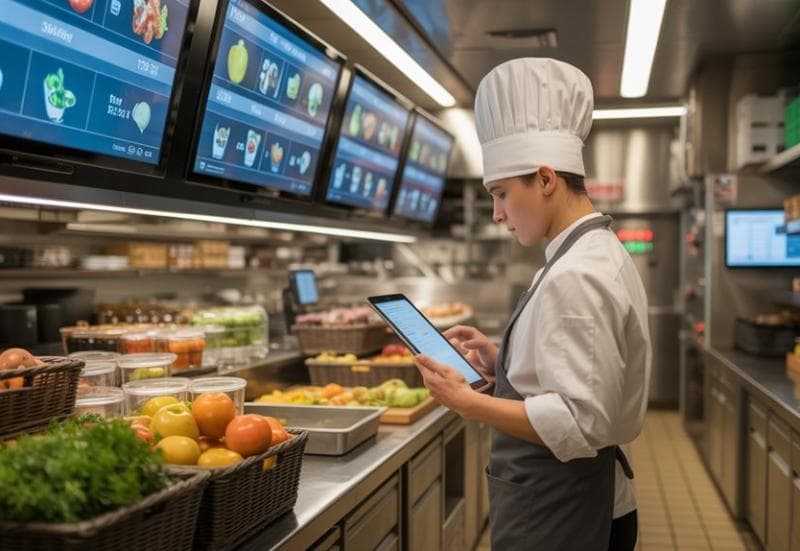
An inventory management system enables real-time tracking of stock levels, helping us reduce waste and enhance food safety. By integrating with point-of-sale (POS) systems, these tools streamline operations and provide insights into ingredient use, optimizing our purchasing decisions for specific menu items.
Accurate logging of purchases, usage, and expiration dates is essential for minimizing food waste. Regular audits help us identify discrepancies and avoid overstocking.
Staff training ensures the consistent application of inventory practices, such as the First-In, First-Out (FIFO) method, further reducing waste. By keeping inventory organized, we not only boost efficiency but also increase cash flow, benefiting our overall financial health.
Strategies for Accurate Stock Level Monitoring
To guarantee accurate stock level monitoring, we should integrate real-time inventory tracking alongside regular stock audits.
By establishing par levels based on average usage, we can maintain ideal stock levels and prevent shortages.
These strategies not only help us reduce waste but also align our ordering decisions with actual consumption patterns, supporting efficient inventory management.
Real-Time Inventory Tracking
In today's fast-paced restaurant industry, we're finding that real-time inventory tracking systems are essential for maintaining efficient stock level monitoring. By integrating inventory management software with POS systems, we can achieve accurate tracking of sales and stock levels, ultimately helping to reduce food waste. This enables us to adjust orders promptly, preventing overstocking by 20-30%.
Automated alerts keep us informed of low stock levels, ensuring popular menu items remain available and boosting customer satisfaction.
By identifying trends and usage patterns, we enhance financial management and streamline operations.
The digital approach decreases manual entry errors by up to 50%, improving efficiency.
Real-time tracking enables proactive decision-making, optimizes resources, and supports a more sustainable business model.
Regular Stock Audits
Real-time inventory tracking provides a dynamic picture of our stock levels, but regular stock audits add an essential layer of accuracy and control. By conducting regular audits, we can identify discrepancies between recorded and actual inventory, helping us maintain accurate stock levels and minimize waste.
Establishing a consistent audit schedule, such as weekly or monthly checks, ensures that we effectively monitor items, preventing overstocking or spoilage. Using a standardized checklist during audits enhances inventory accuracy, facilitating informed purchasing decisions.
Analyzing audit findings allows us to adjust purchasing and usage patterns, optimize inventory turnover, and reduce expired items. Ultimately, regular audits enhance operational efficiency by revealing food usage trends and supporting the development of streamlined menu pricing strategies.
Par Level Management
When it comes to maintaining precise inventory levels, par level management is key. By setting a minimum stock threshold on our par inventory sheet, we can guarantee we've enough inventory to meet customer demand without overstocking.
This approach to inventory management helps us reduce waste and streamline food inventory management. Regularly reviewing and adjusting par levels is essential, especially when considering menu changes and seasonal trends.
Implementing these strategies allows us to:
Track inventory effectively to avoid running out during peak periods.
Minimize last-minute substitutions to improve customer satisfaction.
Expedite reorder processes, enhancing operational flow.
Utilize automated inventory management software for real-time stock updates.
The Benefits of Par Level Setting in Restaurants
In our restaurant operations, setting par levels is essential for preventing stock shortages and ensuring we always have the right amount of ingredients on hand.
By optimizing restocking timing, we can keep our kitchen running smoothly and avoid the stress of last-minute substitutions.
This approach not only improves our cash flow by reducing excess inventory but also supports a more efficient and profitable business.
Prevent Stock Shortages
Establishing par levels is a critical strategy for preventing stock shortages in restaurants. By determining the minimum quantity of each inventory item needed, we guarantee that we meet customer demand and maintain consistent service. Par levels are a crucial component of inventory management, enabling us to maintain a just-in-time stock level without overstocking.
Consistent Availability: Par levels help ensure that menu items are always available, thereby enhancing service quality.
Improved Operational Flow: Staff can focus on delivering quality service rather than managing shortages during busy periods.
Reduce Waste: By ordering just in time, we minimize waste and avoid overstocking.
Adaptability: Regularly reviewing par levels based on sales trends and seasonal changes allows us to optimize inventory control.
This approach supports efficient operations and customer satisfaction.
Optimize Restocking Timing
By setting par levels, we ensure that restocking occurs at the optimal time, maintaining smooth operations.
Par levels are a cornerstone of effective inventory management. They allow us to track food efficiently and precisely determine when stock is used and needs replenishment.
This proactive approach to order management enables us to reduce food waste and prevent items from expiring before their scheduled dates.
Improve Cash Flow
Few things are as essential as managing cash flow effectively in the restaurant business. By setting par levels, we streamline inventory management and harness the power of inventory control to enhance our financial performance.
Par levels help us to:
Reduce waste by avoiding excess inventory that leads to spoilage.
Enhance cash flow by making informed purchasing decisions based on actual demand.
Maximize food costs by maintaining optimal stock levels and avoiding excessive ordering.
Enhance operational efficiency by aligning inventory with menu prices and usage patterns.
Conducting Effective Inventory Audits
Conducting effective inventory audits is essential for maintaining a restaurant's operational efficiency. By performing regular audits—either weekly or monthly—we can identify discrepancies between the recorded and actual inventory. This helps reduce waste, track inventory accurately, and avoid overstocking, especially with perishable items. By using a standardized checklist, we ensure that all items are accounted for, enabling us to adjust our purchasing decisions based on actual usage patterns.
Here are the Audit Steps & their Benefits:
- Regular Audits - Reduced waste
- Standardized Checklist - Accurate inventory management
- Compare Records - Identify overstocking
- Track Perishables - Reduce spoilage
- Analyze Audits - Enhance menu pricing strategies
These audits provide valuable data, enabling us to refine our menu pricing strategies effectively. Ultimately, this maintains ideal stock levels and enhances customer satisfaction.
Staff Training for Better Inventory Practices
In our efforts to link inventory control to menu prices, training our staff on effective inventory practices is essential.
By implementing the First In, First Out (FIFO) method, we guarantee that older stock is used before it expires, minimizing spoilage and maximizing cost efficiency.
Regular training sessions not only teach our employees these techniques but also promote a culture of accountability that greatly impacts our bottom line.
Importance of Staff Training
Effective inventory management hinges on the essential role of staff training.
It's understood that well-trained staff can make all the difference in maintaining efficient inventory practices. They help us minimize food waste and maximize financial savings through:
Understanding portion control: Reducing food waste on plates and increasing customer satisfaction.
Monitoring expiration dates: Ensuring older stock is used first to prevent spoilage.
Promoting accountability: Encouraging staff to take ownership of inventory management.
Improving purchasing decisions: Using waste analysis to adjust orders and control costs.
Implementing FIFO Techniques
Although it may be easy to overlook, implementing the First In, First Out (FIFO) technique is a cornerstone of effective inventory management. By using older stock first, we can markedly reduce food waste and achieve substantial cost savings.
Proper staff training is vital in this process, ensuring that employees understand how FIFO enhances meal quality and customer satisfaction. Labeling items with their purchase dates is essential for effective inventory control, allowing staff to identify older items quickly.
Regular training sessions should emphasize the impact of FIFO on profit margins and stress the importance of preventing food waste by avoiding expired items. We can enhance inventory management by continuously monitoring food waste and conducting audits, which will pinpoint areas needing improvement and allow for timely retraining to maintain ideal practices.
Leveraging Historical Data to Inform Pricing Decisions
When we examine historical sales data, we uncover valuable insights that enable us to make informed pricing decisions for our menu items. By analyzing this data, we can refine our inventory management and adjust menu prices to minimize waste and enhance profitability.
Here’s how:
Identify peak demand periods: Adjust pricing dynamically to capitalize on high-traffic times.
Track ingredient usage trends: Optimize portion sizes and align prices with consumption patterns.
Utilize seasonal trends: Adjust offerings based on ingredient availability and customer preferences to minimize spoilage.
Implement automated alerts: Prevent last-minute ordering with alerts based on inventory turnover.
These strategies ensure that our pricing remains competitive and reflective of actual demand, resulting in a more efficient and profitable operation.
Common Pitfalls in Inventory Management
In the domain of inventory management, several common pitfalls can derail even the best-intentioned operations. Overordering ties up capital and leads to food waste, while poor storage results in spoilage. Not following the First-In, First-Out (FIFO) method means older stock expires before it is used, which increases food waste and impacts our bottom line. Incorrect portion sizes also lead to increased costs and waste. Properly labeling items is essential to avoid expired ingredients. By tracking inventory effectively, we can manage our inventory more efficiently, control food costs, and minimize waste in restaurant operations. Here's a quick guide:
Common Pitfalls, Their Consequences and Solutions:
- Overordering: Wasted capital - Order accurately
- Poor storage: Spoilage - Improve organization
- Ignoring FIFO: Expired stock - Employ FIFO
Aligning Menu Prices With Ingredient Costs for Profitability
Successfully managing inventory sets the stage for aligning menu prices with ingredient costs, a critical aspect of maintaining profitability in the restaurant business.
By calculating the food cost percentage, ideally between 25% and 35%, we ensure that our menu prices accurately reflect the true ingredient costs. Regular analysis of the cost of goods sold (COGS) is essential:
Identify underpriced items: Confirm that every dish supports profitable margins.
Utilize historical data: Adjust prices in response to fluctuations in ingredient costs and demand.
Menu engineering: Categorize dishes to focus on high profitability, minimizing waste.
Regular updates: Keep menu prices aligned with changing ingredient costs.
In the restaurant industry, effective inventory management and menu engineering enhance cash flow, reduce waste, and maintain financial health.
Conclusion
In managing restaurant inventory, we've seen how vital it is to link inventory control with menu pricing. By adopting the FIFO method, setting par levels, and utilizing management systems, we minimize waste and ensure efficient stock levels. Staff training and leveraging historical data help us make informed pricing decisions. Avoiding common pitfalls allows us to align menu prices with ingredient costs, boosting profitability. With these strategies, we can effectively reduce waste and increase cash flow.