When pricing takeout vs. dine-in, we should consider the impact of third-party fees and packaging costs. Delivery services charge commissions of 15-30%, decreasing profit margins. Additionally, quality packaging is necessary to guarantee food integrity during delivery, but it adds to costs. To manage these expenses, adjusting takeout menu prices, encouraging direct orders, and strategically selecting packaging are essential. By addressing these challenges effectively, we can make takeout a profitable venture. There's more to discover about optimizing these strategies.
Key Takeaways
- Increase menu prices for delivery orders to offset third-party commission fees and packaging costs.
- Encourage direct orders to minimize reliance on third-party delivery services and reduce associated fees.
- Develop separate delivery menus featuring higher-margin items to enhance profitability.
- Use visually appealing, functional, and eco-friendly packaging to increase perceived value and customer satisfaction.
- Implement loyalty programs and exclusive discounts to boost repeat business and increase average order sizes.
Understanding the Cost Structure of Takeout vs. Dine-In
When we examine the cost structure of takeout versus dine-in, it's essential to acknowledge the distinct financial challenges each option presents.
For takeout, delivery fees and packaging costs are significant factors to consider. Restaurants must invest in high-quality packaging to maintain food quality, which can increase expenses. Third-party delivery services add another layer of cost, taking a commission of 15% to 30%, which impacts profit margins.
This is unlike dine-in options, where these fees don't apply. To address these costs, many restaurants adjust menu pricing for takeout, raising prices to maintain profitability.
Consumer demand for takeout remains strong, but businesses need to optimize their menus effectively. Balancing these elements is essential to guarantee that takeout remains financially viable alongside traditional dining options.
The Role of Third-Party Fees in Takeout Pricing
Let's examine how third-party delivery fees affect restaurant profitability and explore strategies to manage these costs effectively.
With commission fees ranging from 15% to 30%, restaurants often face a significant hit to their profit margins, prompting many to increase menu prices for delivery orders.
To mitigate these challenges, some restaurants are adopting strategies such as encouraging direct orders or negotiating better rates to alleviate the financial strain.
Impact on Restaurant Profitability
Although third-party delivery services offer convenience, they come with significant costs that can eat into restaurant profits. Service fees from these third-party services typically range from 15% to 30%, which can drastically impact restaurant profitability, especially for smaller establishments. To offset these costs, many restaurants increase their menu prices for delivery orders. However, this can lead to higher prices for consumers compared to dine-in options.
| Factor | Impact on Profitability | Considerations |
|---|---|---|
| Delivery Service Fees | Decrease | Adjust menu prices or absorb costs |
| Menu Prices | Increase for delivery | May deter customers from ordering |
| Packaging Costs | Increase with takeout | Essential for maintaining quality |
The average order value for delivery is often lower than dine-in, adding to the strain on profitability. As delivery services grow, adapting pricing structures becomes essential.
Strategies for Fee Management
Managing third-party fees effectively is essential for restaurants aiming to maintain profitability in the competitive takeout market. These fees, which often range from 15% to 30% of delivery orders, can significantly reduce profit margins if not managed properly.
One strategy is adjusting menu prices specifically for delivery orders to absorb these costs. By implementing fee management techniques, we can guarantee our pricing strategies don't alienate customers.
Creating separate delivery menus with higher-margin items can also help offset these third-party fees. While raising prices for delivery may initially seem risky, many customers are willing to pay more for convenience.
However, we must carefully balance this to guarantee the perceived value remains attractive. With thoughtful strategies, we can effectively navigate the challenges of third-party fees.
Navigating Packaging Costs for Takeout Orders
When it comes to managing packaging costs for takeout orders, restaurants face a complex balancing act. Restaurant owners must consider third-party fees and choose between high-quality and eco-friendly packaging that maintains food quality. The challenge is to protect profit margins without compromising environmental values. Effective inventory management is vital to avoid both overstocking and waste.
Here's a quick overview of key considerations:
| Consideration | Impact | Solution |
|---|---|---|
| Packaging Costs | Increases expenses | Monitor inventory |
| Third-Party Fees | Reduces profit margins | Adjust pricing strategies |
| Eco-Friendly Packaging | Environmental concerns | Balance options |
| Food Quality | Affects customer satisfaction | Use temperature-controlled |
| Profit Margins | Essential for sustainability | Optimize costs |
Balancing these factors ensures that restaurants can provide quality takeout without compromising their financial health.
Strategies for Pricing Takeout Effectively
As we explore strategies for pricing takeout effectively, it’s essential to recognize the significant impact of third-party delivery service fees on our profit margins. Delivery services often take a substantial cut, ranging from 15% to 30% of restaurant orders.
To address this, we can adjust our pricing strategies by creating a separate online menu specifically for takeout. This menu can feature higher-margin items, aligning with consumer preferences while maintaining profitability.
Additionally, packaging costs must be considered, as high-quality materials are essential for preserving food quality during transport. Offering discounts for in-store pickups can also help reduce our dependency on costly delivery services.
Recovering Costs Through Takeout Fees
To effectively recover costs, we must consider implementing takeout fees to offset the high commissions from third-party delivery services, which often eat into our profits. High commission fees, sometimes as high as 30%, can significantly reduce our margins. To combat this, we can introduce a small takeout fee that helps cover packaging costs and delivery-related expenses. Consumer willingness to pay for convenience means they might accept these fees if the quality and service are maintained. Offering discounts for in-store pickup is another effective strategy, encouraging customers to opt for cost-effective delivery options. By strategically applying takeout fees, we can enhance profitability and better manage expenses.
Cost of takeout comparison:
| Option | Impact |
|---|---|
| Delivery | High commission fees |
| Takeout fees | Offset packaging costs |
| In-store pickup | Customer discounts |
| Profitability | Improved margins |
Enhancing Value Perception for Takeout Customers
To enhance the value perception for takeout customers, we need to focus on strategic pricing techniques that highlight the convenience and cost-effectiveness of ordering from home.
By offering loyalty program incentives, we can encourage repeat business and foster a sense of value among our patrons.
Additionally, investing in innovative packaging solutions guarantees that food arrives in prime condition, further boosting customer satisfaction and perceived value.
Strategic Pricing Techniques
While takeout orders often result in higher spending, up to 50% more than dining in, we can strategically enhance value perception for our customers by adjusting pricing techniques.
By implementing strategic pricing, we can offset third-party delivery fees and packaging costs. Featuring higher-margin menu items in takeout orders not only covers these expenses but also improves customer perception.
Offering exclusive discounts or bundled meal deals can incentivize customers to opt for takeout. Highlighting the quality and freshness of our ingredients in marketing materials further boosts value perception.
Digital platforms play a crucial role in showcasing customer reviews and testimonials, building trust, and fostering loyalty. These pricing strategies guarantee that customers perceive the convenience of takeout as valuable and worthwhile.
Innovative Packaging Solutions
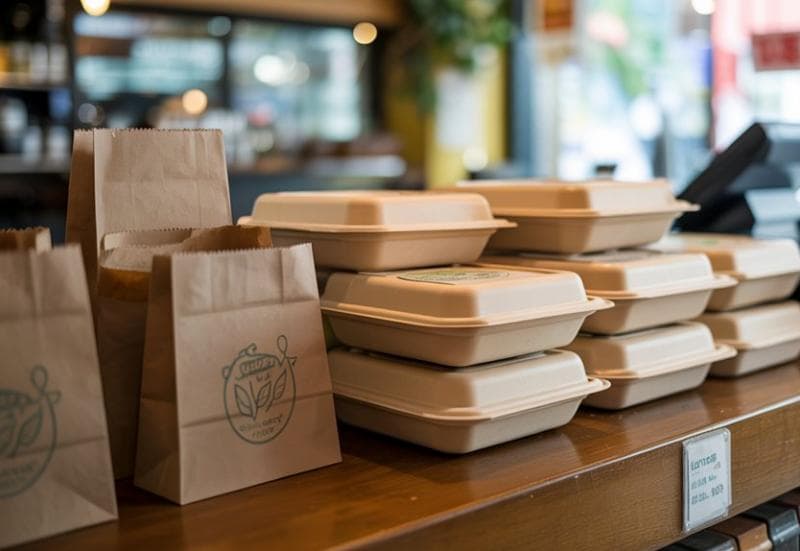
When we focus on enhancing the takeout experience, innovative packaging solutions play an essential role. By investing in high-quality, temperature-controlled containers, we guarantee food integrity during transport, which helps mitigate the impact of third-party delivery fees.
Sustainable packaging options are imperative, as 56% of consumers prioritize eco-friendly choices, which influences their purchasing decisions and boosts brand loyalty.
Additionally, customizable packaging enhances perceived value by allowing portion control and easy handling. This can lead to repeat business and larger orders.
Investing in visually appealing and functional packaging can increase perceived value by 20%, making takeout more attractive than dining in or choosing competitors.
Ultimately, by addressing these key aspects, we can enhance customer satisfaction and differentiate ourselves in the competitive market.
Loyalty Program Incentives
Loyalty program incentives are a powerful tool for enhancing the value perception among takeout customers. By offering exclusive discounts or points for takeout orders, we can boost customer retention and directly counteract high third-party delivery fees.
Research shows that 70% of consumers are more likely to order from restaurants with rewards programs. This not only increases repeat orders by 20% but also encourages customers to order directly.
Additionally, loyalty initiatives can increase average order sizes by 10-15%, helping offset rising packaging costs. As 70% of consumers prefer direct orders, a well-implemented loyalty program strengthens our connection with customers, reducing reliance on third-party platforms.
Ultimately, this strategy supports sustainable growth while delivering greater value to our loyal patrons.
Comparing Profit Margins: Takeout vs. Dine-In
Although the convenience of takeout is undeniable, the profit margins tell a different story when compared to dine-in services.
Takeout food often faces slimmer profit margins due to delivery platforms charging commission fees between 15% to 30%. These third-party fees, combined with packaging costs, greatly impact profitability.
In contrast, the dine-in experience generally benefits from higher margins, as it minimizes packaging needs and allows us to upsell directly to customers. Additionally, the average order value tends to be lower for takeout, which further reduces the profit per transaction.
Marketing Tactics to Boost Takeout Sales
How can we effectively boost our takeout sales? By leveraging a mix of strategic marketing tactics, we can expand our customer base and enhance profitability. Here’s how:
Boost takeout sales by using strategic marketing to grow our customer base and profits.
-
Loyalty Programs: Encourage repeat orders through online food ordering by offering loyalty rewards, appealing to the 45% of consumers who seek such incentives.
-
Discounts for In-Store Pickup: Highlight these offers to attract cost-conscious customers, helping manage delivery services and packaging costs.
-
Social Media Engagement: Enhance our brand's visibility and drive more takeout orders by engaging actively on social platforms.
-
Targeted Marketing Campaigns: Focus efforts during peak demand times like lunch and weekends to reach 60% of weekly customers.
-
Visually Appealing Menus: Utilize professional photos to create enticing online menus, which encourage larger orders.
Balancing Customer Expectations and Operational Costs
To successfully balance customer expectations and operational costs, we need to focus on a few key strategies. First, let's consider the impact of delivery services. With third-party fees often exceeding 30%, it's essential to adjust pricing strategies. Offering discounts for in-store pick-up can help us avoid these high costs while meeting customer expectations for affordability. Optimizing packaging options guarantees quality during delivery, addressing concerns, as 80% of customers blame us for delivery issues. Additionally, focusing on healthier menu items can attract the 56% of consumers who prioritize nutrition.
| Strategy | Benefit | Challenge |
|---|---|---|
| Adjust Pricing | Increased profitability | Customer price sensitivity |
| Optimize Packaging | Maintain quality | Higher packaging costs |
| Offer Pick-Up Discounts | Reduced third-party fees | Potential lower order volume |
Final Thoughts
In summary, when pricing takeout versus dine-in, we must carefully consider third-party fees and packaging costs. By implementing effective pricing strategies, we can recover these costs and maintain healthy profit margins. Enhancing the value perception for takeout customers is essential, as is striking a balance between customer expectations and operational expenses. Through thoughtful marketing tactics, we can boost takeout sales while maintaining competitive pricing . Ultimately, understanding these dynamics helps us optimize both takeout and dine-in offerings.