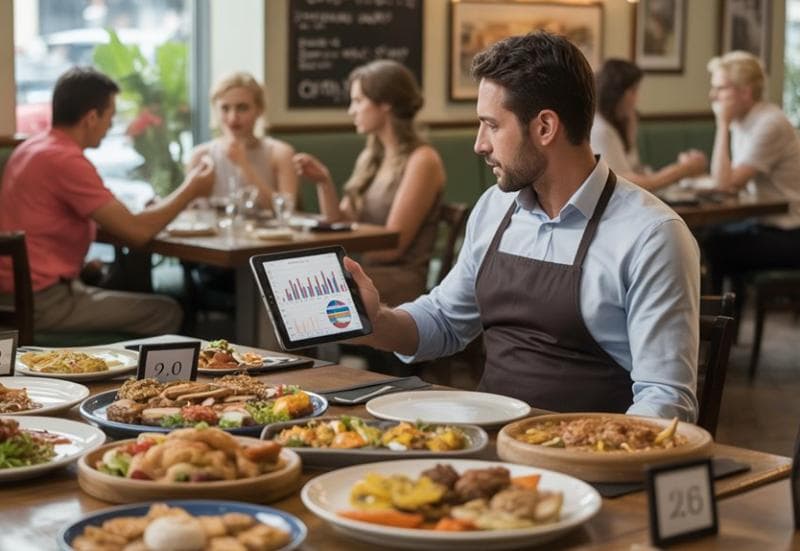
To raise menu prices without losing loyal regulars, we should first assess market trends and analyze costs to guarantee justifiable price increases. Communicating transparently with patrons about these changes is essential. We can plan modest, gradual price hikes while highlighting the value our offerings provide. Leveraging customer feedback and loyalty programs will help us maintain high engagement and satisfaction levels. Continuously monitoring sales data and adjusting our approach accordingly enables us to retain our loyal regulars and further strengthen our strategy.
Key Takeaways
- Communicate price increases transparently to customers through clear signage, regular newsletters, and social media updates to maintain trust and foster understanding.
- Introduce new menu items or seasonal promotions alongside price increases to divert attention from rising costs.
- Implement a loyalty rewards program to offer exclusive discounts, enhancing perceived value and encouraging repeat visits.
- Conduct market research to ensure pricing remains competitive, taking into account local trends and competitor strategies.
- Gather and utilize customer feedback to adjust and align offerings with expectations, maintaining satisfaction and loyalty.
Assess Your Current Market Landscape
When planning to raise menu prices, it's essential that we first assess our current market landscape to guarantee our pricing strategy is competitive and well-informed.
We should start by conducting thorough competitor research to understand their pricing strategies and identify any recent price changes. This helps us position our offerings attractively within the local market.
Monitoring market trends, including inflation and supply chain disruptions, is crucial for predicting how customers may respond to price increases. By utilizing customer surveys, we can gain a deeper understanding of local sentiment and price sensitivity.
Additionally, analyzing sales data can reveal how price changes might affect our loyal customers' spending habits. It's also wise to consider factors such as local events or seasons, ensuring our loyalty program remains appealing.
Analyze Your Cost Structure
To effectively manage menu pricing, we need to evaluate both our fixed and variable costs to understand where our money's going.
Let's identify high-cost ingredients that might be impacting our margins and assess which menu items are most profitable.
Evaluate Fixed vs. Variable
Understanding the balance between fixed and variable costs is essential for crafting a successful pricing strategy. Fixed costs like rent and salaries stay the same, while variable expenses, including food costs and utilities, change with sales volume. Analyzing these elements enables us to develop effective pricing strategies.
Here’s how we can manage them:
Track Food Costs Regularly: Monitoring food costs, which can account for 28-35% of expenses, helps us adjust menu prices to maintain healthy margins.
Analyze Cost Proportions: Evaluate fixed vs. variable costs to identify potential cost-cutting measures without sacrificing quality.
Conduct menu evaluations to assess each item's profitability and popularity, and determine whether adjustments or eliminations are necessary.
Utilize Inventory Management Tools: Leverage these tools to gain insights into cost structures and forecast pricing needs.
Identify High-Cost Ingredients
Identifying high-cost ingredients is crucial for maintaining healthy profit margins, particularly in a volatile market. By analyzing our cost structure, we can determine the ingredients that have a significant impact on menu pricing.
Menu engineering enables us to understand how these high-cost items impact overall profitability. We need to regularly assess these ingredients because market fluctuations can directly influence our profit margins.
Inventory management solutions play a crucial role in this process, providing precise tracking of ingredient usage and costs. This enables us to identify high-cost items that may require recipe adjustments or portion control.
Additionally, comparing supplier prices ensures we're getting the best deals, as even minor differences can significantly impact our food costs. With these strategies, we can make informed decisions on menu pricing.
Assess Menu Profitability
After pinpointing high-cost ingredients, we must assess the profitability of our menu to ensure we're setting prices that sustain healthy margins.
Calculating the food cost percentage is vital, ideally between 28% and 35% of the menu price. By analyzing sales data from our point-of-sale (POS) system, we can identify which menu items are most profitable and popular, enabling us to make strategic adjustments.
It's essential to conduct a comprehensive analysis of our fixed and variable costs, including labor, utilities, and ingredient prices. Evaluating customer feedback and sales trends enables us to identify which items may require pricing adjustments.
Implement a menu engineering analysis to categorize items, guiding our decisions on promotion and pricing.
Here's a streamlined approach:
Calculate food cost percentages.
Analyze POS sales data.
Review fixed and variable costs.
Use menu engineering analysis.
Monitor Competitor Pricing Strategies
Keeping a close eye on competitor pricing strategies is essential for maintaining our restaurant's edge in the market. By regularly analyzing competitor pricing, we ensure that our menu prices remain competitive and accurately reflect the value we offer.
It's important to monitor local and regional pricing trends, as even a 1% price increase among competitors might signal broader market shifts. We should also conduct surveys or focus groups to understand customer perceptions of competitor pricing and their willingness to pay more at our establishment.
Using pricing software or analytics tools helps us benchmark our prices against those of our competitors. Additionally, staying informed about seasonal promotions and discounts offered by competitors enables us to adapt our pricing strategies effectively, ensuring we respond to changing customer expectations.
Evaluate Menu Item Popularity and Profitability
To effectively raise menu prices, we must examine sales data to identify which items are top performers in terms of both popularity and profitability.
By understanding these key factors, we can make informed decisions about which dishes can sustain higher prices without deterring customers.
Additionally, evaluating the cost efficiency of our ingredients and recipes will help us adjust pricing strategies while maintaining a balance between customer satisfaction and profit margins.
Analyze Sales Data
Analyzing sales data is crucial for determining the popularity and profitability of menu items. By leveraging modern POS systems, we can track which items generate the highest profit margins and demand. This insight is vital when considering price hikes while ensuring customer retention.
Here's how we can approach it:
Compare food costs against selling prices: This helps us evaluate the profitability of each item, ensuring that popular dishes contribute positively to overall margins.
Assess customer feedback and sales trends: Regular evaluations identify popular items that can withstand a price increase without losing loyal patrons.
Monitor shifts in average spend per customer: Understanding these shifts helps gauge the impact of pricing changes on customer behavior.
Identify underperforming items: Streamlining the menu allows us to focus on customer favorites, thereby enhancing profitability.
Identify Top Performers
Determining top performers on our menu involves a careful analysis of sales data to identify items that not only sell well but also greatly boost our revenue.
We utilize modern POS systems to track customer preferences and ordering patterns. This helps us identify top performers and make informed decisions about which items to promote or adjust in menu prices.
Customer feedback, both direct and through online reviews, further guides us in understanding which dishes are most valued by our loyal regulars.
Calculating food cost percentages for each item allows us to assess profitability and focus on high-margin items.
Regular menu evaluations ensure that these top performers are highlighted and strategically priced, maintaining high customer interest while protecting our overall profit margins.
Assess Cost Efficiency
Having identified our menu's top performers, we now turn our attention to evaluating cost efficiency by examining both the popularity and profitability of each item.
To effectively assess these factors, we should:
Analyze Sales Data: Identify which dishes consistently attract customers and contribute considerably to revenue. This helps prioritize items for potential price adjustments.
Calculate Profit Margins: Assess the profitability of each item by comparing food costs to selling prices. Confirming high-demand items maintain healthy margins supports price increases without sacrificing quality.
Gather Customer Feedback: Utilize online reviews and direct feedback to understand customers' perceptions of value and satisfaction. This informs which items to retain, modify, or remove.
Monitor Competitor Pricing: Compare our pricing strategies with those of competitors to ensure competitive yet fair pricing, justifying any necessary increases to our loyal customers.
Plan Incremental Price Adjustments
When planning incremental price adjustments, starting with a modest increase, like 3%, can help us manage the potential drop in customer volume more effectively. This approach helps maintain customer trust and keeps loyal customers from feeling alienated.
By clearly communicating the reasons behind these incremental price increases, we can build understanding and acceptance. It’s essential to highlight the value we provide, so our customers see the worth in continuing to dine with us despite the changes.
Timing these adjustments with new menu items can also shift focus from the price hike to fresh offerings.
Additionally, monitoring customer feedback and sales data allows us to adjust our strategy based on actual behavior, ensuring our approach remains in tune with customer preferences and expectations.
Enhance Perceived Value With Quality Improvements
As we consider incremental price adjustments, enhancing the perceived value through quality improvements becomes a strategic approach to maintaining customer satisfaction and loyalty.
By elevating customer perceptions, we can justify higher prices. Here’s how we can achieve enhanced value:
Higher-Quality Ingredients: Use premium ingredients to enhance the taste and appeal of our dishes, ensuring customers notice the difference.
Enhance Cooking Techniques: Invest in training our kitchen staff to refine cooking methods, resulting in superior menu items.
Introduce Unique Offerings: Create limited-time or seasonal dishes with exclusive ingredients to intrigue customers and justify price adjustments.
Incorporate Customer Feedback: Regularly gather and implement customer suggestions to align quality improvements with their expectations, thereby reinforcing loyalty.
Communicate Price Changes Transparently
When we raise menu prices, it's essential to communicate the changes clearly and honestly to maintain trust with our customers.
By using simple language and notifying them in advance, we can ensure they understand the reasons behind the increases.
Let's utilize various platforms to share these updates, providing everyone with ample notice and context.
Clear and Honest Updates
To guarantee a seamless change when raising menu prices, clear and honest updates are essential. Communicating a price change to our customer base with transparency helps maintain trust and loyalty.
We can consider these steps:
Social Media Announcements: Use platforms like Facebook or Instagram to inform customers about upcoming price changes, explaining the reasons behind them.
Email Newsletters: Send detailed emails to our subscribers, highlighting economic factors like inflation or rising costs that necessitate the adjustment.
In-Restaurant Signage: Display signs within the restaurant to notify in-person patrons and ensure everyone is aware of the change.
Staff Training: Equip our team with the information they need to explain the rationale behind the increase, focusing on value rather than profit.
These steps guarantee our loyal customers remain informed and understanding.
Use Simple Language
Communicating price changes clearly and transparently is just as important as announcing them; it ensures that customers are informed and aware of the changes. When we raise prices, using straightforward language helps avoid confusion and builds trust with our customers.
It's vital to communicate directly, without resorting to euphemisms. Customers appreciate honest explanations about the economic factors driving the increase.
We should ensure that our entire team understands the reasons behind the price adjustments so they can effectively communicate them to our patrons. Utilizing social media and website updates allows us to announce new prices transparently.
Alongside these announcements, we should highlight the value we're providing, such as any improvements or new offerings, to maintain customer satisfaction. By being clear and direct, we can foster continued loyalty and understanding.
Notify Before Changes
Before we implement any price increases, it’s crucial to notify our customers well in advance.
Clear communication helps maintain trust and guarantees happy customers. We can notify before changes by using several methods:
Direct Communication: Inform our regulars through emails or in-person chats. This personal touch helps build trust.
Online Announcements: Update our social media and website to let your customers know about the changes. Explain why we're adjusting prices strategically.
Staff Training: Equip our team with the right information so they can confidently answer questions and offer insights into the rationale behind the price adjustments.
Highlight Enhancements: Emphasize any improvements or new services that come with the price change. This reinforces the value provided, making the shift smoother.
Utilize Social Media for Effective Outreach
When it's time to raise menu prices, effectively utilizing social media can make a significant difference in maintaining customer trust and loyalty.
By announcing price changes on social media platforms, we can guarantee our messaging emphasizes transparency. Sharing the reasons behind these increases helps reinforce trust. Engaging content that highlights the quality and value of our offerings can justify the adjustments.
We should leverage customer feedback to gauge reactions, allowing us to address concerns and refine our strategy. Additionally, sharing updates or menu enhancements alongside price changes frames them positively.
Encouraging interaction by asking for opinions or sharing experiences fosters a sense of community, which can help mitigate the impact of price hikes. Let's use social media to maintain a strong connection with our customers.
Prepare Staff for Customer Inquiries
As we use social media to communicate our price changes transparently, preparing our staff for customer inquiries is equally important.
We must equip them with messaging that explains the rising operational costs necessitating these changes. Here’s how we can guarantee our team is ready:
Training: Offer training on active listening techniques to address customer concerns empathetically, reinforcing our commitment to customer satisfaction.
Confidence: Guarantee staff maintain confidence and brand integrity when discussing price changes, avoiding language that implies negotiation.
Enhancements: Encourage highlighting improvements in service or products that accompany the price increase to demonstrate continued value.
Feedback Loop: Regularly update staff on customer feedback to refine our communication strategy and maintain effective dialogue with patrons.
These steps help maintain trust and transparency.
Implement Promotions to Ease the Transition
To ease the shift of raising menu prices, we can implement strategic promotions that offer our customers added value. By implementing promotions such as limited-time discounts or bundling popular items with new offerings, we can mitigate the impact of a price increase. This approach not only maintains profitability but also makes loyal customers feel valued.
Offering loyalty rewards or points for purchases encourages customer retention, as regulars are incentivized to continue dining with us. Special discount days or a "happy hour" can create a sense of exclusivity and appreciation among our patrons.
Communicating these promotions effectively through email newsletters or social media ensures that our loyal customers remain informed and engaged, reinforcing their connection to our restaurant during this transition.
Gather and Respond to Customer Feedback
Raising menu prices requires careful attention to how customers perceive and react to these changes. We need to gather customer feedback and respond thoughtfully to it in an active manner. Here’s how we can approach this:
Direct Feedback: Use surveys or comment cards to directly gather customer feedback about price changes and understand their perceived value of our menu items.
Online Monitoring: Keep an eye on online reviews and social media. These platforms provide valuable insights into customer sentiments, which can inform our pricing strategies.
Personalized Communication: Engage with regulars through email, informing them about price changes and inviting their input, which helps maintain loyalty.
Transparent Responses: Address negative feedback with transparency, explaining the reasons behind price changes to reinforce trust and commitment to customer satisfaction.
Monitor Sales Data Post-Adjustment
While adjusting our menu prices is a significant step, it's essential that we closely monitor the sales data afterward to understand its impact. By utilizing modern point-of-sale (POS) systems, we can analyze key metrics, including daily sales volume, average spend per customer, and customer traffic patterns. Monitoring these will help us assess how the price increase affects customer retention and overall revenue. Here's a metric and its focus area:
- Daily Sales Volume - Revenue Impact
- Average Spend - Customer Spending Habits
- Customer Traffic - Demand Shifts
- Customer Feedback - Sentiment & Preferences
Comparing sales data before and after the adjustment allows us to spot changes in behavior and preferences. Gathering direct customer feedback through surveys and online reviews further helps us address concerns and improve satisfaction, ensuring our loyal regulars remain happy.
Adjust Pricing Based on Customer Retention Metrics
As we consider adjusting our menu prices, it's crucial to analyze customer retention metrics to confirm we don't alienate our loyal patrons.
By focusing on these metrics, we can make informed decisions about price increases:
Repeat Visit Rates: Track how often loyal customers return. This helps us determine the best timing and extent of price adjustments.
Average Spend Per Customer: Monitor shifts in spending habits following price changes to fine-tune our strategic pricing approach.
Popular Menu Items: Utilize sales data to identify the items that loyal customers love and adjust prices strategically for these items.
Test High-Margin Items: Consider selectively increasing prices on high-margin items while keeping lower-margin favorites steady to maintain customer satisfaction.
These steps guarantee strategic pricing without jeopardizing customer loyalty.
Explore Loyalty Programs to Retain Customers
To effectively retain our customers amidst price increases, exploring loyalty programs can be a strategic move. By implementing such programs, we can incentivize repeat business, as 82% of consumers prefer brands with loyalty options. Offering exclusive discounts or rewards helps mitigate price increase responses. Here are the loyalty benefits, their impact on customer retention, and the communication strategy:
- Exclusive Discounts: Mitigates price sensitivity - Regular emails
- Tiered Programs: Boosts spending - In-store promotions
- Personalized Rewards: Enhances engagement - Feedback incorporation
Introducing tiered loyalty programs encourages higher transaction values, increasing revenue. Regular communication about these benefits, either through emails or in-store promotions, enhances engagement, leading to a 15-20% increase in customer retention. By incorporating feedback, we ensure that our offerings align with customer expectations, thereby fostering loyalty.
Regularly Review and Refine Pricing Strategies
Implementing loyalty programs is just one strategy to manage price increases, but it’s crucial to regularly review and refine our pricing strategies to sustain customer loyalty and profitability.
We must consistently analyze sales data and customer feedback to spot trends in purchasing behavior. This helps us decide when and how to adjust prices without losing loyal patrons.
Here’s how we can effectively manage this process:
Regularly analyze: Use modern POS systems to track food costs and inventory for data-backed decisions.
Competitor research: Understand market pricing to guarantee our prices remain competitive and justified.
Incremental price increases: Implement small, gradual price changes to foster customer acceptance.
Transparent communication: Clearly inform customers about changes via social media and newsletters to maintain trust.
Conclusion
In summary, by carefully evaluating our market landscape and analyzing our cost structure, we can strategically plan incremental price adjustments to optimize our business. Monitoring competitor pricing and evaluating menu item profitability guarantees our changes are competitive and justified. Keeping a close eye on sales data and customer retention metrics after the adjustment helps us understand the impact. Implementing loyalty programs further strengthens customer relationships. By regularly refining our pricing strategies, we can maintain profitability while retaining our loyal customers.