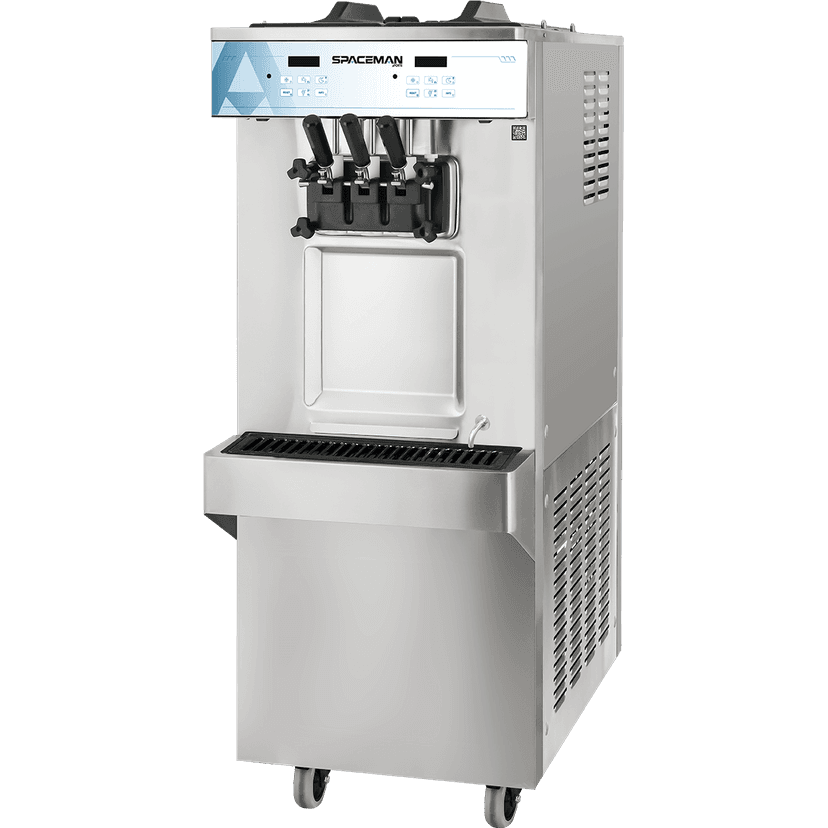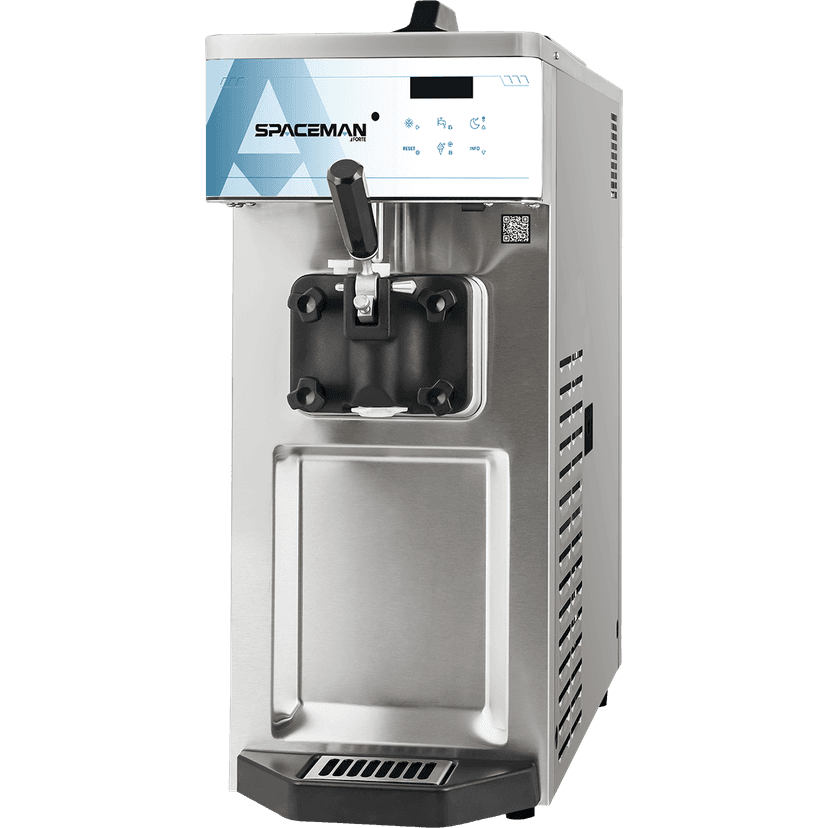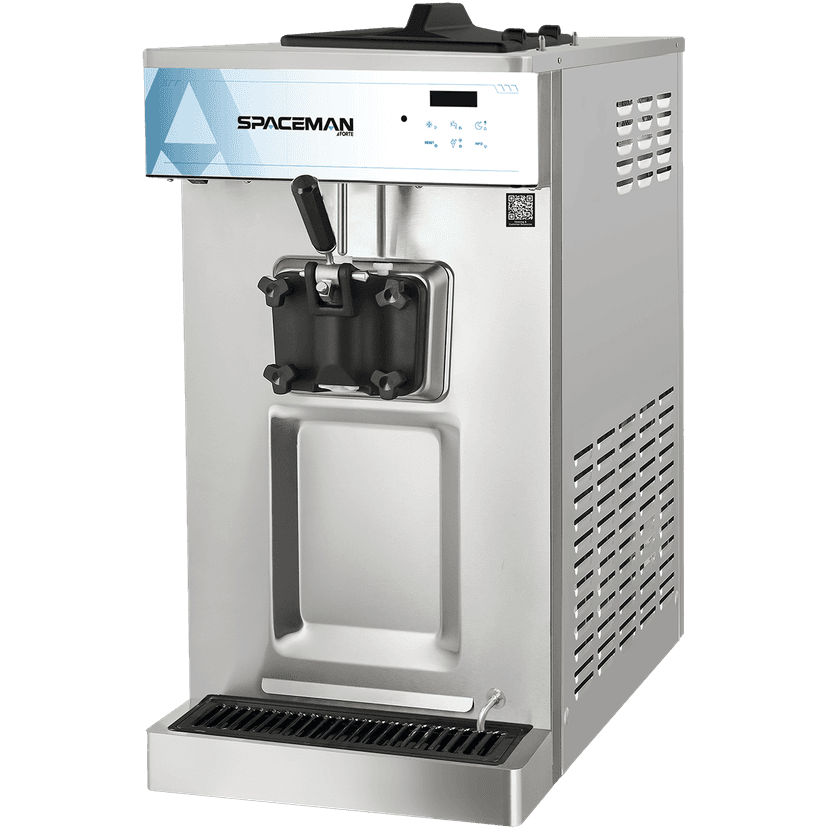
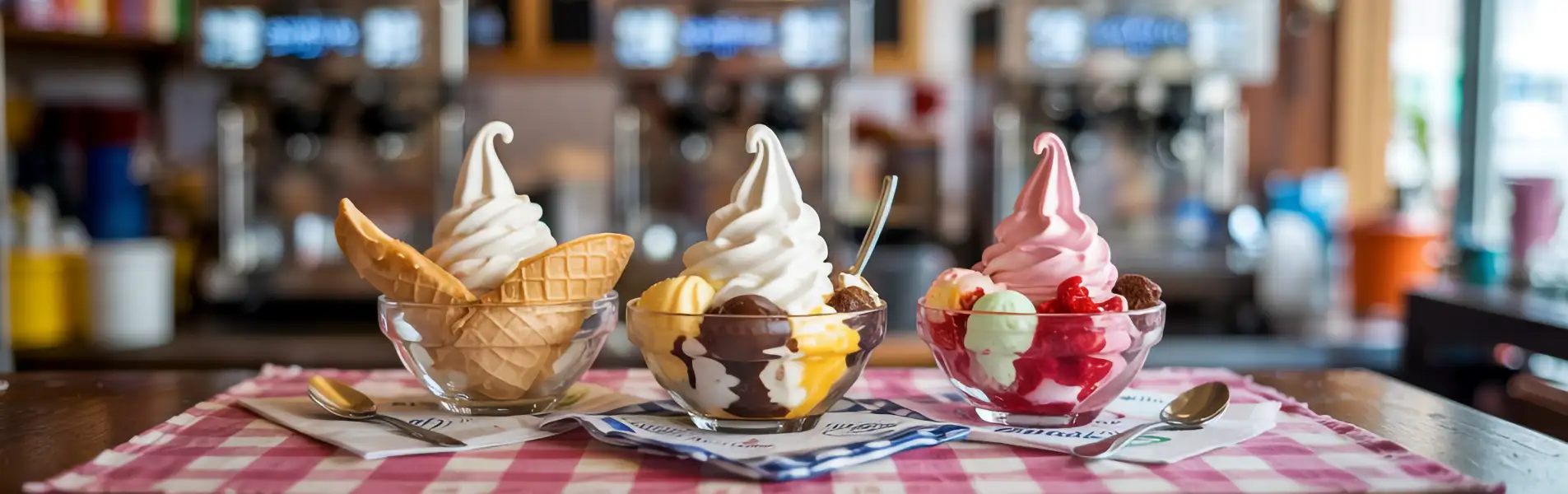
Most soft serve machines look alike from the front. The differences that matter to an operator are the feed system, the cabinet format, the number of flavors, and the electrical supply the machine needs. Get those four right and the rest is preference.
1. Gravity or pump feed
A gravity machine lets mix fall from the hopper into the freezing cylinder. A pump machine pushes it in under pressure and injects air on the way. That air is called overrun, and it is the single biggest lever on your cost per serving.
The effect is visible in the manufacturer's own numbers. Compare two machines that share an identical 3.4 quart freezing cylinder:
- Spaceman 6236-C (gravity) — 350 servings per hour, 20 quart hopper
- Spaceman 6236A-C (pump) — 400 servings per hour, 13.8 quart hopper
Same cylinder, more output, and a smaller hopper. That is not a downgrade. The pump machine gets more finished product out of less mix, so it does not need to carry as much. On the twin-flavor pair the gap is wider still: the 6250-C pours 350 an hour on gravity, the 6250A-C pours 450 on a pump.
Gravity wins on simplicity. Fewer moving parts, less to strip at close, and a denser finished product that suits gelato and premium custard. Pump wins on margin, and it is the only option if you plan to serve frozen cocktails, which need the structure a pump provides.
Full comparison of gravity and pump feed.
2. Countertop or floor
Countertop machines sit on a counter and free up floor space; floor models carry bigger hoppers and pour more. The dividing line in practice is hopper capacity and how often someone has to refill during a rush.
- Countertop — Spaceman 6210-C, 6236-C, 6236A-C. The 6210-C is 18 inches wide.
- Floor — Spaceman 6250-C, 6250A-C, 6378-C, 6378A-C. The 6378 pair stands 63 inches tall on castors.
Do not choose a countertop machine purely to save money. If the counter it needs is the counter your staff work on, you have traded a floor footprint for a workflow problem.
3. Single flavor, two flavors, or twist
A single-flavor machine has one hopper and one cylinder. A two-flavor machine has two of each and, on most models, a third spout that pours both at once as a twist. That twist is effectively a free third menu item.
Two-flavor machines cost more and take longer to clean, because you are cleaning two of everything. The question is whether a second flavor earns its keep. For a dedicated ice cream shop it always does. For a restaurant adding dessert to an existing menu, a single flavor done well is usually the better start.
4. Electrical supply — the constraint that rules machines out
This is the one that catches people, and it is worth checking before you fall in love with a model.
- 115V — plugs into a standard outlet. No electrician, no scheduling, no permit. The Spaceman 6210-C is the 115V soft serve option.
- 208-230V single phase — needs a dedicated circuit and the right receptacle. Most of the range sits here, on an L6-20P plug.
- Higher-draw floor models — the Spaceman 6378-C and 6378A-C draw 24 amps and use an L6-30P. They also offer a dual-plug configuration that runs each side on separate freezing, cooling and drivetrain systems, giving full redundancy: if one side goes down, the other keeps pouring.
If you do not already have the circuit, add the electrician's quote to the machine price before you compare models. It is often the difference that decides the decision.
What about air cooled and water cooled
Every machine in the range is air cooled as standard, with water cooling available as an option. Air cooled is simpler and needs clearance — typically six inches at the back — for the machine to breathe. Water cooled makes sense in a hot, tight, or poorly ventilated space where an air cooled machine would struggle to shed heat. If you are unsure, you are almost certainly fine on air.
Then size it
Once you have narrowed by feed, format, flavors and power, the last step is matching output to your actual rush. That is its own calculation, and guessing it is how operators end up with a machine that cannot keep up on a Saturday.