With an at-table QR ordering system, we capitalize on real-time data to fine-tune our pricing strategies. This dynamic approach enables us to adjust prices in response to demand and customer behavior, thereby optimizing profit margins while enhancing the overall dining experience. By personalizing offers and analyzing menu performance, we can feature high-margin items and craft targeted promotions. These strategies not only increase average order values but also improve operational efficiency. Discover more about revealing the full potential of QR ordering systems.
Key Takeaways
- At-table QR ordering systems enable real-time dynamic pricing adjustments based on demand fluctuations to optimize profit margins.
- QR ordering captures customer behavior data, enabling the development of tailored pricing strategies and personalized promotions to drive sales.
- Dynamic menu insights help identify high-margin items, providing opportunities for upselling through strategic digital menu placement.
- QR systems streamline operations, reducing labor costs and increasing profitability through efficient order processing and reduced errors.
- Enhanced customer experiences with QR ordering lead to higher average order values and increased table turnover, maximizing revenue potential.
Understanding At-Table QR Ordering Systems
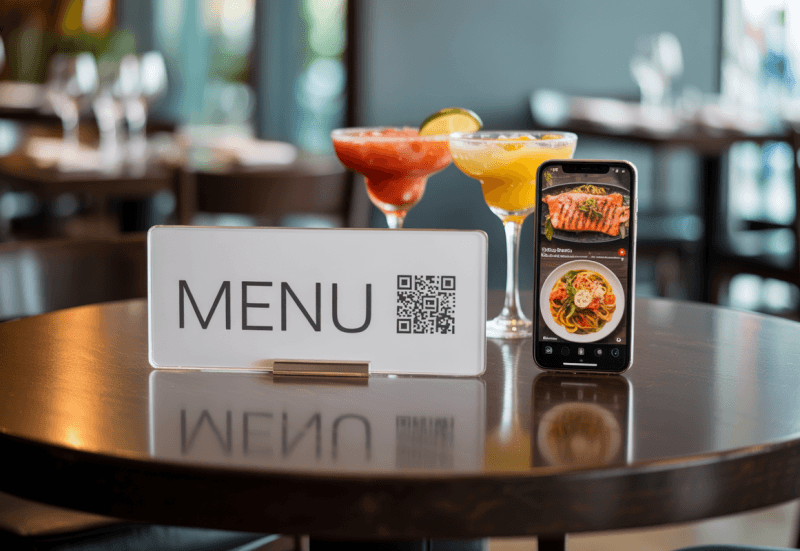
At-table QR ordering systems are transforming the dining experience by allowing us to engage with digital menus, place orders, and pay directly from our tables.
These QR code solutions offer a seamless way to browse offerings and place orders directly, eliminating the need for staff intervention. By doing so, we can reduce errors that often occur during manual order-taking. This leads to an improved customer experience, as we can guarantee that our orders are accurate and processed swiftly.
The convenience of digital menus allows us to navigate options effortlessly and enjoy a more personalized dining experience.
Not only do these systems enhance satisfaction, but they also boost operational efficiency. Restaurants benefit from faster order processing and quicker table turnover, ultimately streamlining service and enhancing the overall dining experience.
Harnessing Real-Time Data for Pricing Strategies
As we explore the potential of QR code ordering systems, we see an opportunity to harness real-time data to inform our pricing strategies.
By analyzing customer interactions and sales patterns, we can make dynamic pricing adjustments that reflect actual demand and enhance profitability.
This data-driven approach also provides valuable insights into menu preferences, enabling us to refine our offerings and maximize revenue.
Dynamic Pricing Adjustments
When we harness real-time data for dynamic pricing strategies, restaurants can greatly enhance their profitability by adjusting prices based on current customer behavior and demand. QR code ordering systems provide invaluable insights into customer preferences and sales patterns. By using real-time analytics, we can make dynamic pricing adjustments that increase average order values by 10-19%. This strategy not only aligns prices with current demand but also encourages upselling by tailoring pricing to customer preferences. Implementing such adjustments guarantees we optimize profit margins while minimizing waste. Here's how it looks in practice:
| Strategy | Impact |
|---|---|
| QR Code Ordering | Provides real-time customer insights |
| Dynamic Pricing Adjustments | Increases average order value by 10-19% |
| Real-Time Analytics | Enables personalized pricing |
| Customer Preferences | Encourages upselling |
Data-Driven Menu Insights
Harnessing real-time data from QR code ordering systems offers us powerful insights into customer behaviors and preferences, enabling us to refine our menu strategies effectively.
By analyzing data-driven insights, we can closely track menu performance. This allows us to identify which items resonate with customer preferences and adjust our pricing strategies accordingly. With immediate feedback, we can swiftly update offerings and prices based on sales data, ensuring our menu stays competitive.
Identifying high-margin items helps us tap into upselling opportunities, increasing average basket values by up to 19%.
Furthermore, understanding peak ordering times and popular dishes guides us in launching targeted promotions during slow periods. Ultimately, this dynamic approach enhances profitability while keeping customers satisfied.
Dynamic Pricing: Adjusting to Demand Fluctuations
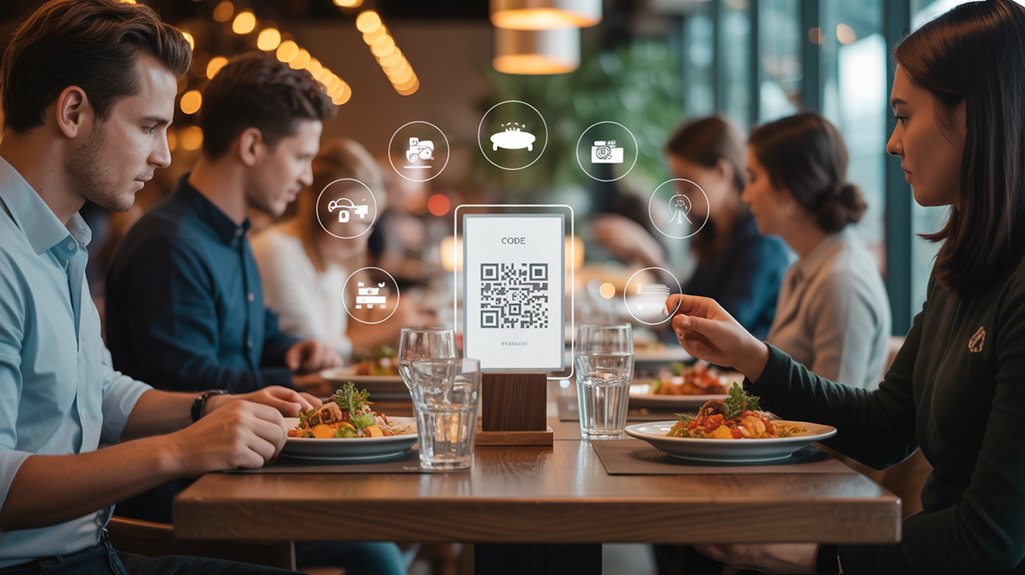
Dynamic pricing is a powerful tool that restaurants can leverage to adjust menu prices in response to real-time demand fluctuations, ultimately driving revenue growth. By integrating dynamic pricing with QR code ordering, we can quickly adapt to changing customer volumes. This approach not only optimizes profits but also enhances customer loyalty and increases table turnover. QR code systems provide valuable data analytics, tracking order patterns and peak dining times, which inform strategic pricing decisions.
| Strategy | Benefit | Result |
|---|---|---|
| Dynamic Pricing | Real-time demand response | Revenue growth |
| QR Code Ordering | Quick price adjustments | Profit optimization |
| Time-Sensitive Offers | Encourages sales | Higher table turnover |
| Data Analytics | Informed pricing | Maximized profitability |
| Personalized Pricing | Tailored offers | Enhanced customer loyalty |
Enhancing Customer Experience Through Personalized Offers
Although the restaurant industry is constantly evolving, one thing remains clear: enhancing the customer experience is essential for success. By utilizing QR code ordering systems, we can offer personalized offers that notably boost customer satisfaction.
These systems allow us to provide real-time updates and upselling prompts, encouraging customers to explore tailored menu recommendations. In fact, personalized offers have been shown to increase average basket value by up to 19%.
We can also customize promotions based on customer behavior and seasonal trends, ensuring targeted marketing efforts are effective and timely. By analyzing customer order data, we can create personalized dining experiences that drive repeat visits.
Ultimately, this approach not only elevates the dining experience but also contributes to increased sales and loyalty.
Leveraging Behavioral Insights for Menu Optimization
As we explore the potential of QR code menus, understanding dining behavior patterns becomes essential for optimizing our offerings.
By strategically designing menus that leverage behavioral insights, we can encourage customers to explore higher-priced items and streamline their ordering process.
This approach not only enhances customer experience but also boosts our restaurant's efficiency and profitability.
Understanding Dining Behavior Patterns
When we immerse ourselves in dining behavior patterns, we uncover a treasure trove of insights that can greatly optimize menu strategies.
By analyzing dining experiences and leveraging customer preferences, we can tailor offerings to meet specific demands. Real-time data from QR ordering systems enhances our understanding of peak times and popular dishes, allowing for targeted menu optimization.
The ordering process becomes more efficient, with dynamic adjustments reflecting current trends. Behavioral insights suggest that strategically placing high-margin items on the menu can boost profitability.
Additionally, offering customizable options and upsell suggestions during the ordering process can increase average order values by up to 19%.
These data-driven strategies enable us to refine our approach, ensuring a seamless, profit-optimized dining experience for our customers.
Strategic Menu Design Techniques
In the realm of strategic menu design, leveraging behavioral insights plays a crucial role in optimizing our offerings. By placing high-margin items prominently, such as at the top or in highlighted boxes on digital menus, we can boost their visibility and sales. This approach enhances average order values.
Utilizing descriptive language and enticing visuals further enhances customer engagement, with well-crafted descriptions increasing sales by up to 27%. Limited-time promotions capitalize on the psychology of scarcity, prompting consumers to make impulsive purchases. Psychological pricing, like $9.99 instead of $10, positively influences customer perception and can increase order volume.
Maximizing Revenue With Timely Promotions
Integrating timely promotions into QR code ordering systems is a powerful strategy for boosting revenue. At the QR Code Table, we can leverage our ordering solution to spotlight upselling opportunities. By displaying targeted offers directly on digital menus, we can increase the average basket value by 19%.
Using real-time data analytics, we identify peak times and customer preferences. This enables us to strategically time promotions for maximum impact.
Restaurants report a 25-40% improvement in order processing speed, which increases the likelihood of impulse purchases. Limited-time offers via QR codes create a sense of urgency, prompting quicker decisions and higher sales.
With over 70% of diners interested in digital promotions, our timely strategies enhance the dining experience and optimize revenue growth.
Streamlining Operations and Reducing Labor Costs
Our journey to streamline operations and reduce labor costs begins with in-table QR ordering systems. These systems offer numerous benefits:
-
Reduce Labor Costs: By eliminating manual order-taking, we can allocate front-of-house staff more efficiently, focusing on enhancing guest experiences while reducing labor expenses.
-
Streamline Operations: QR code menus and automated order entry speed up processing by 25-40%, reducing the likelihood of errors and minimizing the need for comped meals, which directly boosts profitability.
-
Real-Time Updates: With QR codes, menu changes occur instantly, eliminating the need for costly reprints and reducing operational costs associated with traditional printed menus.
Increasing Table Turnover With Efficient Order Processing
Although many factors contribute to a successful dining experience, efficient order processing is essential for increasing table turnover. Implementing a QR ordering system can boost restaurant operations by improving order processing speed by 25-40%.
This system allows guests to place orders directly, reducing communication delays and enhancing service speed. As a result, the average time spent per table decreases by 12 minutes, leading to increased seating capacity during peak hours.
Upselling and Cross-Selling Opportunities via QR Menus
QR menus open up new opportunities for upselling and cross-selling by utilizing smart suggestion techniques that guide customers toward premium items with visually appealing and descriptive content.
With dynamic menu customization, restaurants can instantly update offerings to spotlight limited-time promotions or popular pairings, enhancing the dining experience and boosting sales.
This flexibility, combined with data-driven insights, enables us to tailor recommendations that align with customer preferences and maximize revenue potential.
Smart Suggestion Techniques
Smart suggestion techniques in at-table QR ordering systems are transforming how restaurants upsell and cross-sell to diners.
By leveraging customer data, these systems can offer personalized recommendations that enhance the dining experience and increase average order value.
Here's how:
-
Upselling: Dynamic QR code menus suggest complementary items, such as appetizers or drinks, boosting sales by up to 19%.
-
Cross-Selling: Personalized recommendations based on past orders improve customer satisfaction and drive additional purchases.
-
Promotions: Dynamic menus highlight limited-time offers, encouraging guests to try new items and boosting sales during peak times.
Dynamic Menu Customization
Dynamic menu customization through QR codes offers a powerful tool for restaurants looking to enhance both upselling and cross-selling opportunities.
With QR codes, we can make real-time updates to menu offerings, enabling us to adjust prices and selections based on demand or inventory levels. By integrating upselling prompts, we can nudge customers toward higher-priced items or suggest complementary dishes, potentially boosting average basket values by up to 19%.
Cross-selling is further enhanced by displaying suggested pairings or upgrades, which increases order volumes and customer satisfaction. Additionally, QR codes enable us to tailor recommendations based on customer preferences or previous orders.
This personalization not only encourages repeat visits but also fosters customer loyalty. Ultimately, dynamic menu customization optimizes both operational efficiency and profitability.
Analyzing Customer Preferences for Strategic Decisions
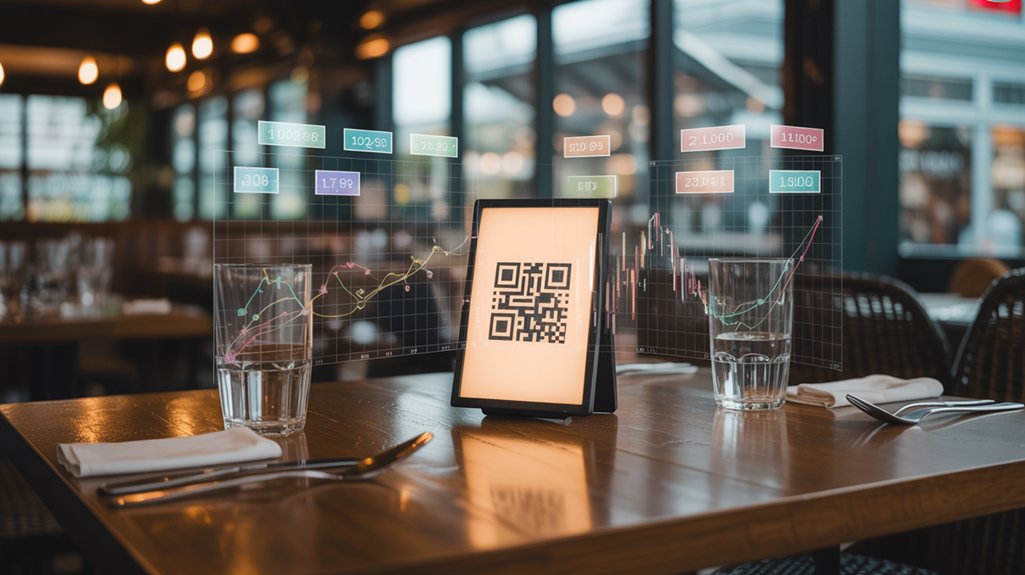
By leveraging QR code ordering systems, we gain a powerful tool for analyzing customer preferences, which plays a crucial role in making informed strategic decisions.
When customers use Scan to Order, we collect valuable data about popular menu items and buying habits. This information informs strategic pricing by revealing:
-
Peak Ordering Times: With real-time analytics, we can dynamically adjust prices to maximize revenue during high-demand periods.
-
Upselling Opportunities: Customer interactions with digital menus highlight opportunities for upselling, enabling us to create targeted promotions that increase average order values.
-
Personalized Marketing: Historical behavior insights help tailor offers that drive repeat visits and boost loyalty.
Additionally, QR code systems allow us to instantly update menu items and prices, ensuring we adapt swiftly to changing preferences and market conditions.
Integrating Seamless Payment Solutions
When integrating seamless payment solutions into our QR code ordering system, we enhance both efficiency and customer experience. By reducing checkout times up to 50%, customer satisfaction and table turnover rates improve markedly.
Our QR code ordering systems support a diverse range of digital payment options, including credit cards, e-wallets, and mobile solutions like Apple Pay, catering to the varied preferences of our customers. Real-time payment processing guarantees transactions are completed immediately, minimizing delays and reducing abandoned orders.
Furthermore, automation through QR codes reduces labor costs by requiring fewer staff for billing, thereby freeing up resources for improved service. Implementing secure digital payment options not only increases average basket value but also encourages upselling and cross-selling, driving higher overall sales.
Implementing Contactless Service for Enhanced Safety
Building upon our seamless payment integration, implementing contactless service through QR code ordering systems greatly enhances the dining experience by prioritizing safety.
By reducing physical interaction, we create a safer environment for both customers and staff. QR codes offer a straightforward solution:
-
Digital Menu Access: Customers scan QR codes with their smartphones to view up-to-date digital menus, eliminating the need for shared physical menus.
-
Streamlined Payment: Contactless payment options, such as Apple Pay, enable guests to pay directly from their devices, further reducing the number of contact points.
-
Customer Satisfaction: Efficient management of social distancing protocols minimizes congestion, enhancing customer satisfaction.
The ability to update digital menus in real-time guarantees our guests have access to the latest offerings, assuring a smooth and safe dining experience.
Utilizing Analytics for Continuous Improvement
Although implementing QR code ordering systems primarily enhances safety, they also reveal a treasure trove of data that can drive continuous improvement in our restaurant operations.
With built-in analytics, we can analyze customer behavior, optimize pricing, and identify trends in ordering patterns. By tracking sales in real-time, we spot high-performing items and adjust our menu offerings accordingly.
Monitoring customer interactions with digital menus allows us to implement targeted upselling prompts, potentially boosting average order values by up to 19%. Continuous data analysis guarantees we remain competitive and aligned with customer preferences, ultimately enhancing satisfaction.
Additionally, accessing real-time inventory data helps minimize waste and maximize profits by adjusting offerings based on stock levels and performance.
Analytics truly transform how we operate.
Case Studies: Successful Implementation of QR Ordering Systems
Let's examine how QR ordering systems have revolutionized operations in the restaurant industry, focusing on streamlined order processing, enhanced menu flexibility, and increased table turnover.
UK establishments report up to 40% faster order processing, which improves efficiency and customer satisfaction. Meanwhile, the QR ordering system cuts 12 minutes off per table, boosting turnover and sales.
With these improvements, restaurants not only reduce wait times but also offer a more dynamic menu experience, contributing to a more efficient and engaging dining atmosphere.
Streamlined Order Processing
When examining the transformation of order processing in the restaurant industry, QR ordering systems stand out for their efficiency and convenience. These systems streamline order processing by utilizing QR Codes, which help reduce wait times and offer real-time updates.
Here's how they make a difference:
-
Speed: UK restaurants have seen a 25-40% improvement in processing speed, resulting in more efficient operations.
-
Labor Savings: A notable reduction in front-of-house labor needs allows staff to focus on enhancing the overall hospitality experience.
-
Revenue: Higher average order values, with increases up to 19%, are achieved through upselling prompts in digital menus.
Moreover, real-time menu updates reduce printing costs and ensure diners always see the latest offerings, thereby boosting satisfaction and loyalty.
Enhanced Menu Flexibility
By embracing QR ordering systems, restaurants are experiencing newfound flexibility in menu management, which is transforming the dining experience.
Enhanced menu flexibility enables us to make updates in real-time, streamlining the process of menu adjustments. This capability eliminates the need for manual reprinting, thereby greatly reducing operational costs.
With QR systems, we can implement price changes swiftly, responding to market demands and maximizing profitability.
Case studies from Burger King and Olive Garden demonstrate how this technology facilitates personalized dining experiences, providing tailored recommendations that enhance customer satisfaction.
The real-time adjustment capability has led to a 19% increase in average basket value, thanks to effective upselling.
Restaurants report a 25-40% improvement in order processing speed, creating more opportunities for increased sales without the hassle of traditional menu updates.
Increased Table Turnover
QR ordering systems have considerably transformed the dining landscape by boosting table turnover rates.
Restaurant owners embracing mobile ordering report remarkable benefits:
-
Increased Efficiency: Establishments have seen table turnover rates rise by up to 40%, thanks to faster service and streamlined processes.
-
Time Savings: With mobile ordering, restaurants save an average of 12 minutes per table, allowing more customers to dine during peak times.
-
Enhanced Profitability: Faster service and fewer errors lead to a 10% increase in average sales, improving overall profitability.
Case studies demonstrate how QR codes minimize order errors and facilitate rapid menu adjustments to meet demand.
These improvements not only enhance customer satisfaction but also optimize restaurant operations, making QR ordering a valuable tool for modern dining.
Final Thoughts
To summarize, at-table QR ordering systems offer significant opportunities for profit-optimized pricing. By leveraging real-time data, we can dynamically adjust prices to match demand, ensuring optimal profitability. Personalized offers enhance customer experience, while behavioral insights help us refine menu options. Integrating seamless payment and contactless service boosts safety and convenience. Continuous analytics drives improvement, and successful case studies demonstrate the potential of these systems. Let's embrace these tools to optimize our pricing strategies and enhance overall efficiency.